
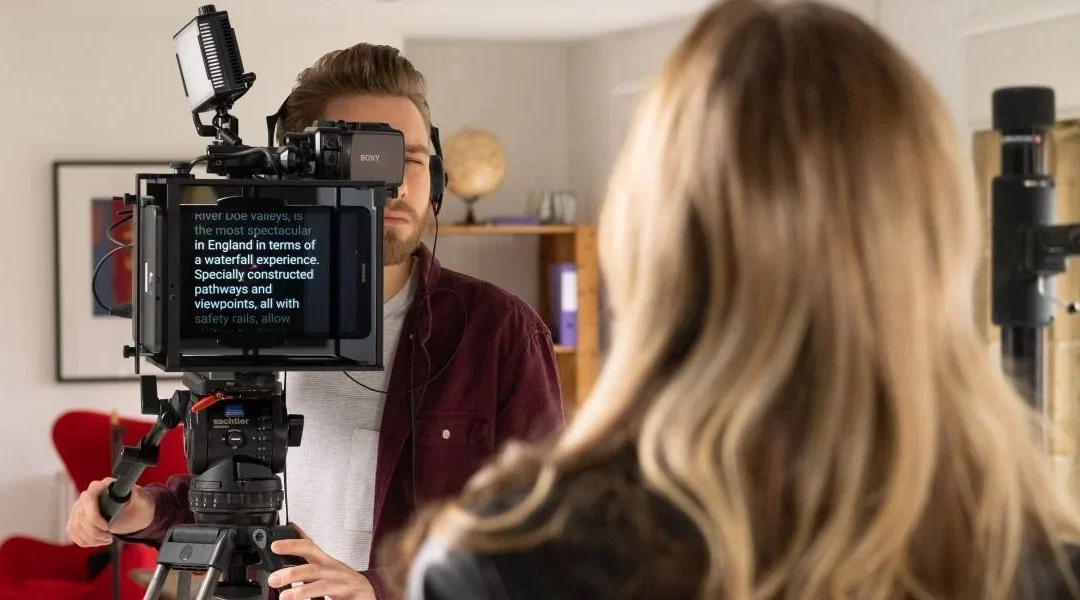
Whether you’re recording a message for prospective students, clients, donors, or patients, a teleprompter can be your best friend… or your worst enemy.
The difference comes down to how you use it.
Here are five practical tips to help non-professional talent look natural, confident, and engaging while reading from a teleprompter.
1. Write for the Ear, Not the Eye
The biggest mistake happens before you even step in front of the camera: using a script that reads well but doesn’t sound natural. Teleprompter scripts should feel conversational, not formal.
Use shorter sentences. Contractions (“you’re” instead of “you are”). Even fragments are okay. If it feels like something you’d actually say in a meeting or conversation, you’re on the right track.
Pro tip: Read your script out loud before filming. If you stumble, rewrite it.
2. Don’t Chase the Words – Set the Pace
A teleprompter should follow you, not the other way around. Many first-time presenters rush because they feel like they need to keep up with the scrolling text.
Instead, find a comfortable speaking pace and ask your operator to match it. If you’re controlling the speed yourself, err on the slower side. Pauses are your friend—they make you sound thoughtful and confident.
Remember: audiences rarely notice a slight pause, but they always notice when you’re rushing.
3. Make Eye Contact (Yes, Really)
The magic of a teleprompter is that it allows you to maintain direct eye contact with your audience—but only if you use it correctly.
Keep your focus steady and avoid darting your eyes back and forth. Position the text so your eye movement is minimal. The goal is to feel like you’re speaking to someone, not scanning lines of text.
A helpful mindset shift: imagine one specific person you’re talking to. It instantly makes your delivery warmer and more authentic.
4. Add Energy – The Camera Takes Some Away
Cameras tend to flatten energy. What feels expressive in the moment can come across as flat on screen.
The solution? Slightly exaggerate your natural tone. Smile more than you think you need to. Vary your inflection. Emphasize key words.
This doesn’t mean being over-the-top—it just means bringing a bit more intention to your delivery so your message lands with clarity and personality.
5. Practice in Short Sections
You don’t need to nail the entire script in one take. In fact, you shouldn’t try to.
Break your script into short sections or paragraphs. Practice each one a couple of times, then record. This reduces pressure and helps you stay fresh and focused.
Most importantly, give yourself permission to be imperfect. A slightly human, natural delivery is always more engaging than a stiff, “perfect” read.
Final Thought
Using a teleprompter isn’t about reading—it’s about connecting. When done well, it allows you to deliver a clear, confident message while still sounding like yourself.
And that’s what your audience actually wants: not perfection, but authenticity.
Looking for production support for your next video? Allied Pixel is a full service video production company, and we’d love to help.